Start with function. Mark the faces and features that locate, mate, seal, slide or support another component. Use datums that describe those relationships and can be reached during manufacturing and inspection.
Distinguish individual and assembled dimensions. The fit between a cover and housing may depend on several dimensions rather than one tight tolerance. A sliding tube also depends on section variation, straightness, guidance and finished surfaces.
Define the measurement condition. State whether acceptance applies before or after heat treatment, coating or assembly. Flexible parts, thermal expansion and moisture-sensitive polymers may require an agreed conditioning or support method.
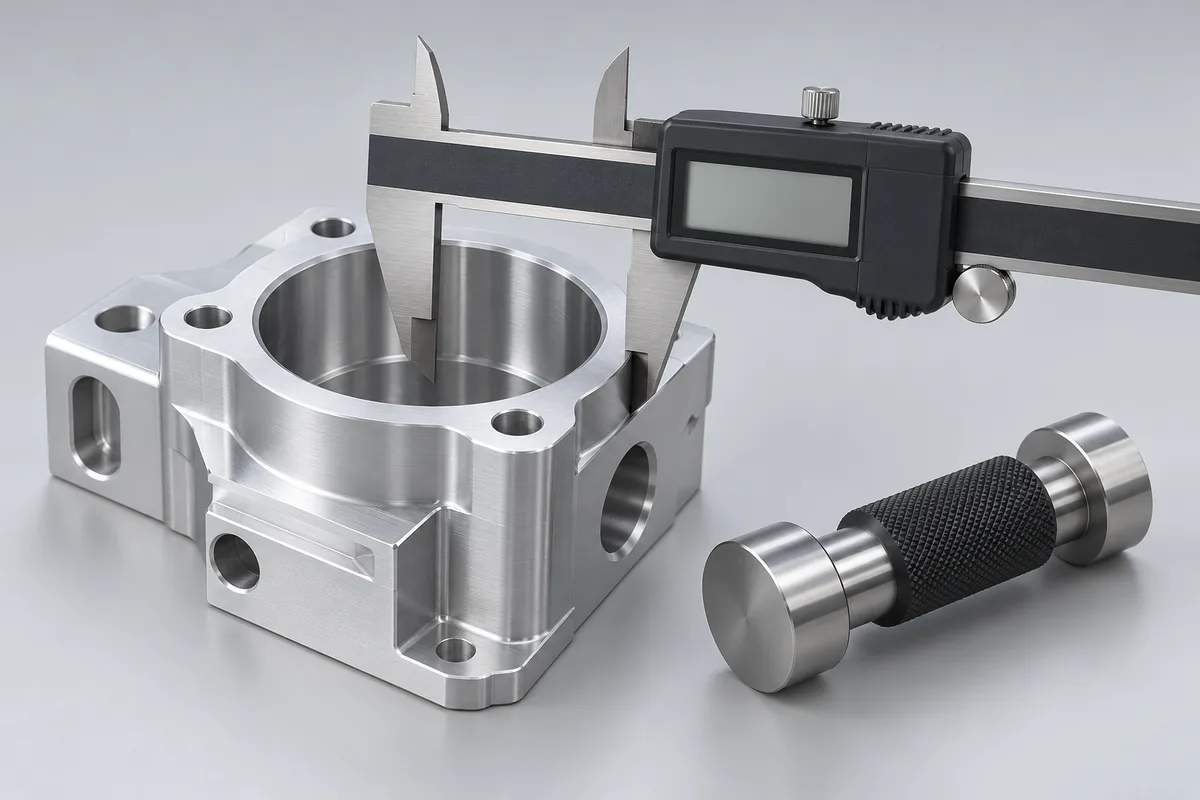
Choose evidence deliberately. Specify first-article checks, required dimension reports, sampling and material records with the RFQ. Do not assume every order includes a full report for every dimension.
Inspection checklist: approved revision; functional datums; critical dimensions; finished condition; measurement access; sample or reporting requirements; visual acceptance where relevant. See quality and inspection planning.
Agree how the result will be accepted
List the features that need a recorded result, then agree the measurement method and sample scope. A report on selected dimensions is different from full inspection of every feature or a product-level performance test.
Keep the measurement conditions meaningful
Specify the finished condition, assembly state and any conditioning requirements that affect the part. Flexible parts may need defined support, and plastic dimensions may depend on moisture or temperature. Discuss measurement access and fixtures during drawing review rather than after the first batch is complete.