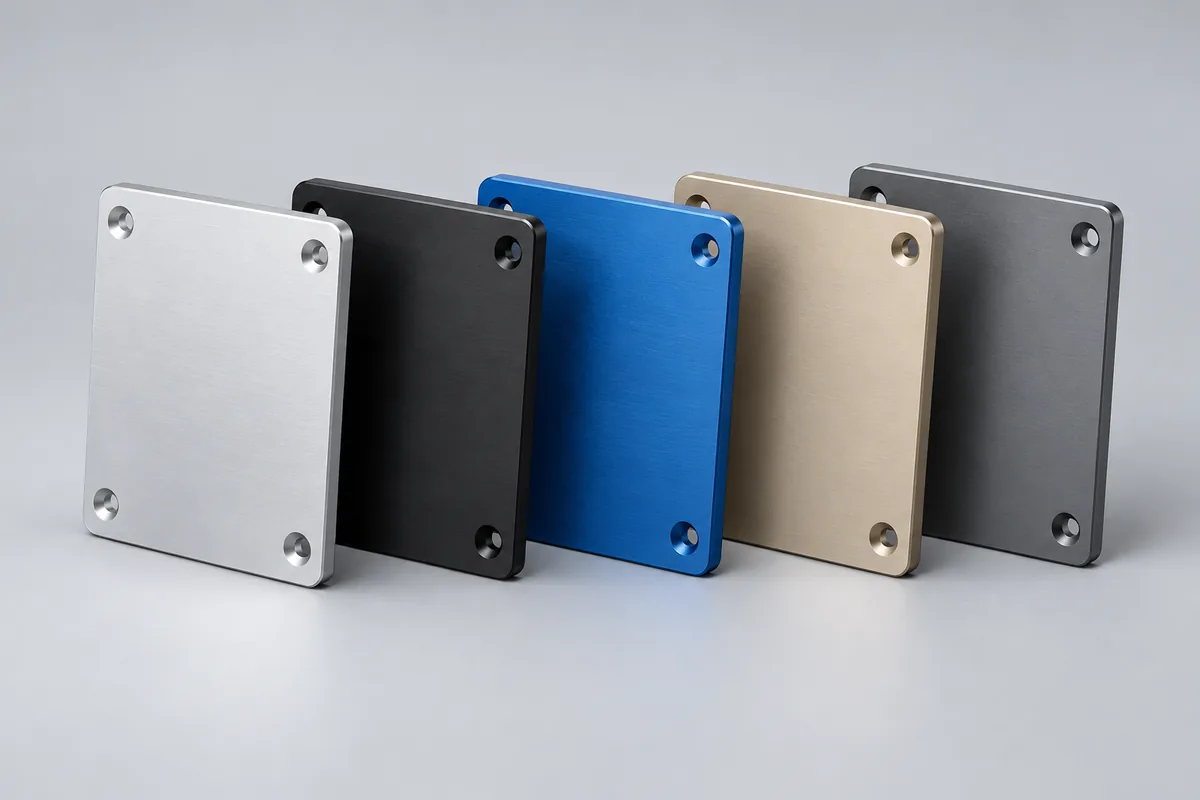
Separate color from texture. A color reference does not specify brushing, blasting, machining marks, gloss or allowable variation. Mark the visible faces and explain how adjacent parts will be viewed together.
Use a physical reference. For appearance-sensitive work, agree a suitable sample, viewing conditions and acceptance range. A screen image is useful for discussion but can change with lighting and display settings.
Review the base material. Alloy, condition, starting stock and surface preparation influence the result. Parts from different alloys or batches may show variation even when the nominal process is the same.
Plan dimensions and contact areas. State which bores, threads and mating faces must meet requirements after treatment. Mark electrical contacts and surfaces requiring masking, including the intended transition at masked edges.
Drawing checklist: base alloy; treatment specification; color and texture reference; cosmetic zones; acceptable contact marks; masking; final-fit requirements; protective packing. Read the anodizing-planning example.
Make the appearance approval reusable
Record the base alloy, visible surfaces, surface preparation, finish specification and the approved physical reference together. A photograph can communicate an intention, but lighting, camera processing and screens limit its use as a precise color acceptance standard.
Check the finished assembly
Review mating parts in the intended finish, especially sliding sections, cover joints and threaded interfaces. Identify masked areas and any cosmetic differences at racking or contact locations before approving a representative sample.