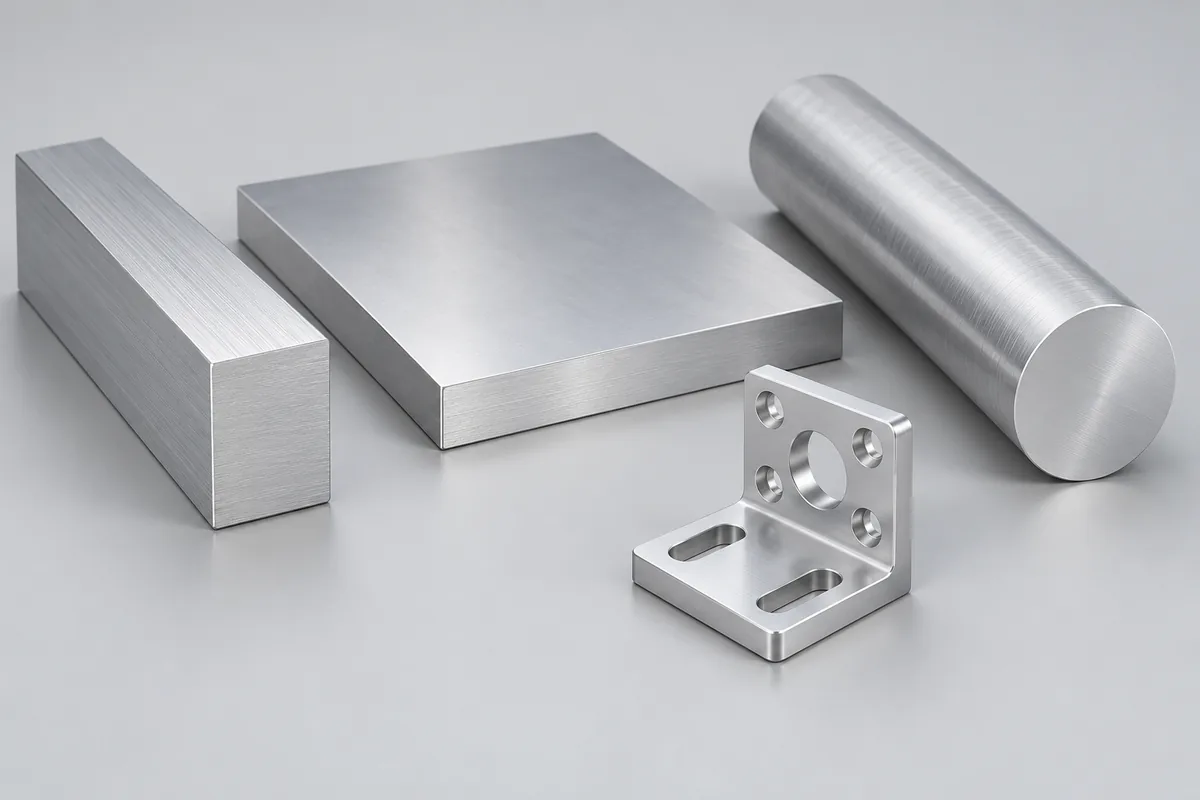
Start with the part form. A machined housing, a bent cover and an extruded rail can require different aluminum specifications. Choose the stock form and process before treating alloy numbers as alternatives.
- 6061: a common starting point for machined housings, plates and structural components.
- 6063: often considered for extruded frames, channels and enclosure profiles where section shape and appearance matter.
- 5052: often considered for formed sheet covers and brackets, with temper and bend geometry reviewed together.
- 6082: an option for strength-oriented structural parts where the required product form is available.
Define the supplied condition. State alloy, temper, material specification and stock form. Strength, forming behavior and the route after machining depend on more than the alloy number.
Check the whole route. Review bends, welding, threads, finish and final fits before accepting an alternative. Mixed alloys can respond differently to anodizing. For a critical application, use the exact material specification and the appropriate engineering validation.
Drawing checklist: alloy; temper; stock form; relevant specification; treatment; critical finished dimensions; required material records. Compare the metal families.
Compare the complete specification
When requesting alternatives, compare the grade, temper, product form, finish and supporting evidence together. A nominally similar alloy supplied in a different condition may behave differently during bending, machining or anodizing. Ask for an approved alternative rather than allowing an undocumented substitution.
Example decision
A formed sheet cover, a machined mounting plate and a long enclosure profile may all be aluminum, but they do not necessarily need the same grade or starting form. Identify the job of each component before trying to standardize the material across the assembly.