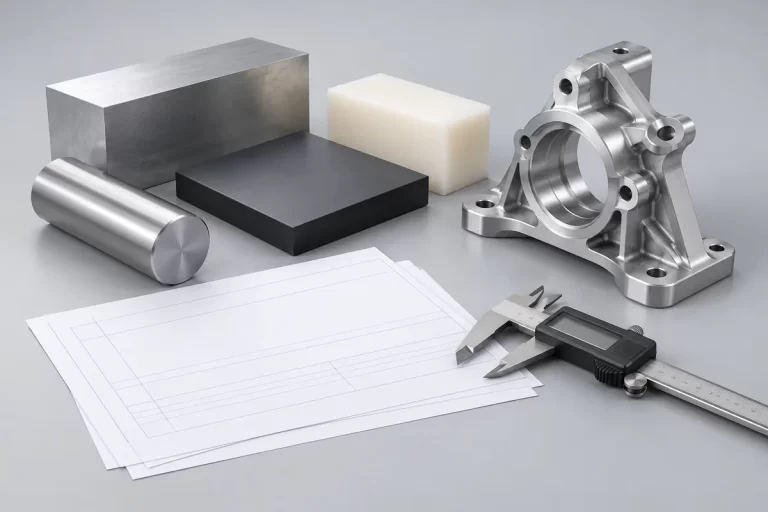
Yes. A sketch, photos, a reference-part description or a clear explanation of function can start the discussion. An initial enquiry helps identify what information is still needed; it is not a substitute for an approved manufacturing specification.
Provide useful context
Include overall dimensions, approximate quantities, intended use, the mating components and any known material or finish requirement. Photos with a scale reference and several views are more useful than one unscaled image. Distinguish measured values from estimates.
Separate fixed and open requirements
Explain which interfaces must match existing equipment and which features can change. If the material or process is undecided, describe the operating environment and the reason for the requirement. Avoid assuming a particular grade, tolerance or test from the appearance of a reference part.
Agree the next technical step
Further dimensions, a controlled CAD model, a drawing or sample evaluation may be needed before a firm quotation or production release. Confirm who supplies and approves the final files. Any proposal should state its assumptions so changes can be reviewed before manufacturing.