A useful quotation starts with a controlled specification. Send enough information to distinguish a firm requirement from an item that still needs engineering review.
Identify the part and revision
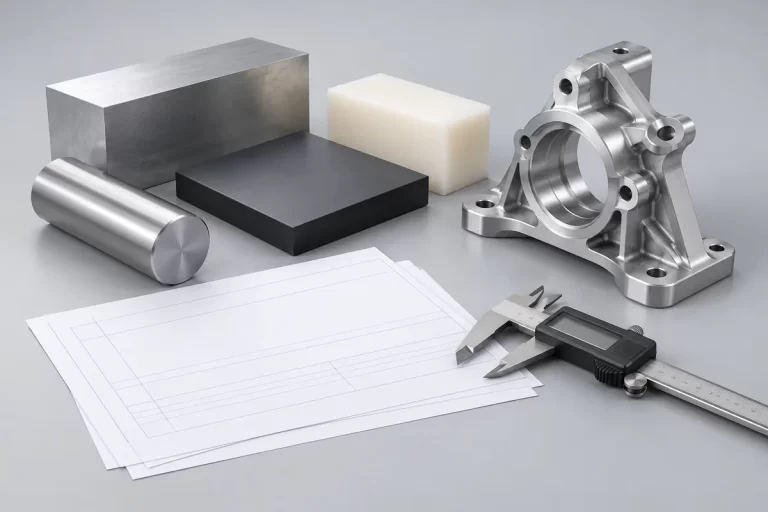
Provide a part number, drawing revision and quantities for each item. A STEP or IGES model communicates geometry; a dimensioned PDF communicates datums, tolerances, threads, material and finish. Identify which file controls if there is a discrepancy, and keep model and drawing revisions consistent.
Explain what makes the component work
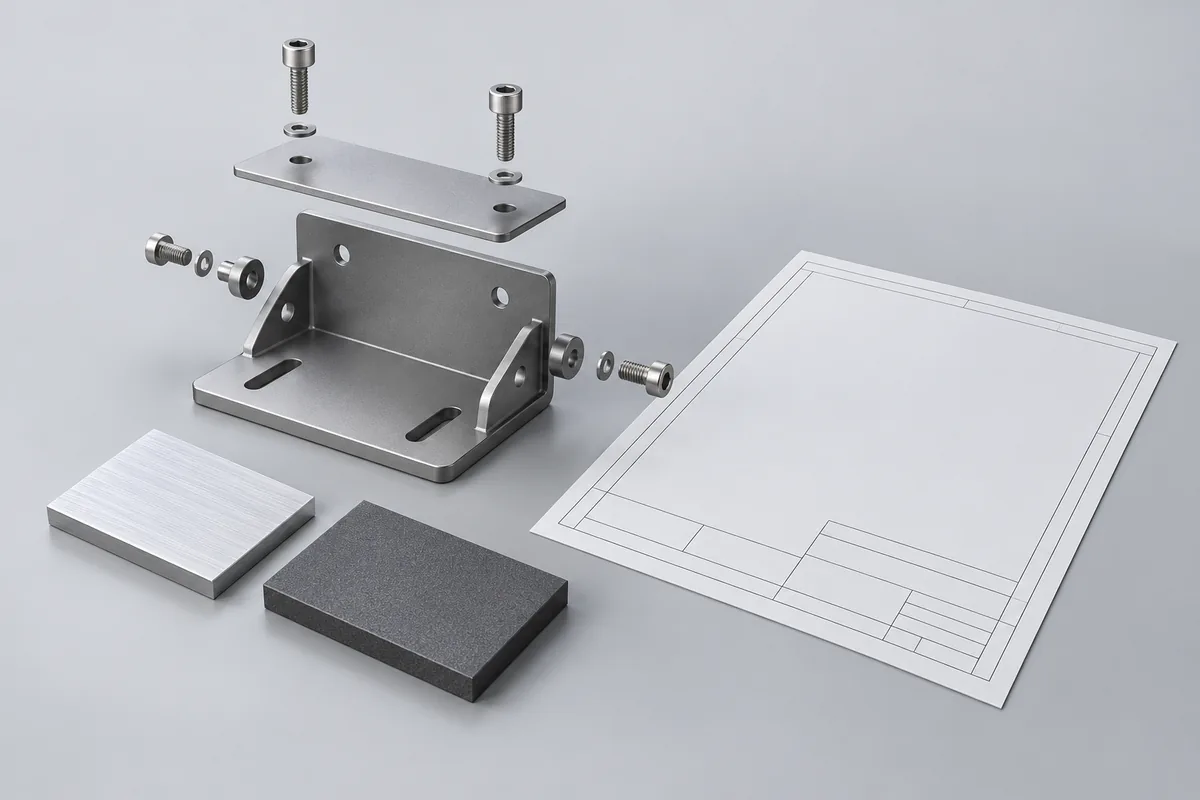
Mark the features that locate, mate, seal or move against other parts. State whether critical dimensions apply after coating, anodizing, heat treatment or assembly. Include a mating-part drawing or a simple assembly view when the interface cannot be understood from one component alone.
List the commercial and acceptance inputs
Separate prototype quantity, likely repeat volume and the requested delivery date. Specify material evidence, first-article checks, inspection records and packaging when required. If a grade or process is undecided, say so: an alternative can be reviewed before the quotation scope is fixed.